Posts

Showing posts with the label pulses

Prospects for exporting Pulses from India

Image
India is not a major exporter of pulses (lentils). It had share of 0.7% in lentils export market in 2020. India is in fact the largest importer of pulses but now India is trying hard to increase its production to reduce dependence on imports and eventually become a major player in lentils export market. For now, Canada and Australia are two biggest exporters of lentils and India has little chance to even play catch-up. In 2020 Canada’s share in pulses exports pie was 58%. Destination for Indian chickpeas exports India has been exporting chickpeas and it is important part of Indian pulses exports basket. Way back in 2016 itself total chickpeas exported from Indian shores reached $126.43 million by value. Dealers of pulses in India concentrate on export of desi chickpeas and kabuli chickpeas. Saudi Arabia, Pakistan, UAE, Algeria and Sri Lanka are main destinations for desi and kabuli chickpeas from India. Many dealers rely on online B2B platforms to trade chickpeas. Tens of thousa...
Pulses: Global Exports, Demand, and Supply

Image
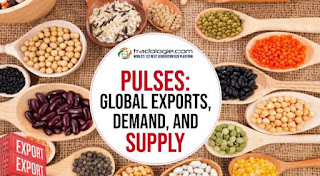
Pulses are, essentially, dried legumes that have been prepared to retain their nutritional value and can be stored easily. They are grown all around the world, with Canada being the largest producer in the world with over half of the global pulses exports. India, Turkey, and Australia are other large producers in the industry. The global demand for  Indian pulses  has been rising steadily over the years, but their consumption is still a far cry from what it should be according to experts as pulses are an excellent source of protein and fiber, making them good for overall health. India’s Pulses Production India is already a large producer of  pulses  and imports are not expected to reduce significantly over the coming years. The country’s pulses production is expected to rise as well. Production in other major countries is also anticipated to grow by more than 2 percent from 2021-2022. As a result, India will continue to be among the world’s largest exporters of pulse...

Factors Affecting Pulses Production In India

Image
Pulses  are an important part of the diet in India and are produced in large quantities. However, there are many factors that affect production, including weather, pests, and diseases. This article will analyze some of the major factors affecting pulses production in India. Factors Affecting Pulses Production In India Pulses are an important part of the Indian diet and are a key ingredient in many dishes. India is the world’s largest producer of  organic pulses , but production has been declining in recent years. There are several factors that have contributed to this decline, including: 1) Weather Conditions : Extreme weather conditions, such as drought or excessive rainfall, can adversely affect pulses production. 2) Pest And Disease : Pests and diseases can destroy crops, leading to lower yields. 3) Lack Of Investment : Farmers may not have the resources or capital to invest in better quality seed, fertilizer, and irrigation, which can all improve yields. 4) Poor Infrastruc...

4 Types of Pulses Export To Bahrain From India

Image
Pulses exports from India  to Bahrain have increased considerably in the last decade, with much of these exports coming from 5 different types of pulses – gram, chickpea, mung bean, green bean, and red kidney beans. If you are an Indian exporter of pulses, it’s important to know about these five types so that you can target your marketing efforts to exactly the type of pulses that buyers in Bahrain want to buy. Let’s take a look at each one individually to see what makes them so popular.   Pulse: An Overview As mentioned earlier, pulses are defined as any kind of dried beans, peas, or lentils. Now that you know what pulses are, you may wonder why we specifically chose to write about  Indian pulses  exports. In short, it’s because of sheer volume and diversity. With over 100 million tons produced per year on par with wheat and corn production combined, India can arguably be considered the pulses capital of the world with most pulses coming from Northern states in Indi...

5 Types of Pulses Exported from India to Ethiopia

Image
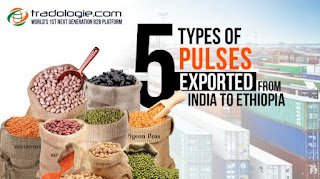
Pulses  are known to have some excellent health benefits, especially for those people who are concerned about their weight. Pulses provide complex carbohydrates that the body can use for energy, and which it can burn slowly over time to make you feel fuller longer, making it easier to avoid overeating in the future. Since organic pulses are high in fiber and other nutrients, they also help supporting digestive health, and can be good foods to include in your diet if you’re looking to lose weight as well as maintain it when you’ve reached your target weight. Because of their high nutrient values, Indian pulses are quite popular among consumers based in Ethiopia. Here are 5  types of pulses  that exported from India to Ethiopia.   Red Lentil Traditionally called Masoor dal, the Red Lentils are quick cooking pulses with an earthy, mild taste. This pulse is often used in Indian and Ethiopian recipes. The most common and inexpensive type of red lentil comes in whole form,...

Top Health Benefits of Pulses which You Can Include in Your Diet

Image
  India is well-known throughout the world for its distinct culture and food. The Indian diet is primarily focused on crops and cereals, and wheat, rice, pulses, and other grains are required and preferred in all cuisines. They are also high in nutrients and have a variety of health advantages. Pulses are one of the most popular agricultural items in Indian cuisine. Pulses come in a variety of forms. Pulses are a vast family with various species capable of thriving in a variety of climates and soils. Lentils (Dals) and legumes, jointly called Pulses, are grown all over the world and play a vital role in the human diet. Pulses have the highest protein content found in any plant. They serve as a low-cost protein source to address the demands of a large number of people. Pulses are an excellent source of thiamine and niacin, as well as calcium and iron. Let’s have a look at the health advantages of Pulses. Rich source of protein: Pulses are high in amino acids, making them a good...

Top Pulses Importing Countries: Overview

Image
  The United Nations General Assembly had declared 2016 as the International Year of Pulses (IYP) and had nominated FAO (Food and Agriculture Organization) as the entity that would implement this concept in collaboration with different stakeholders. The idea was to highlight the crucial role played by pulses in maintaining a healthy diet, sustainable production of food, and also food security. The last four decades have witnessed a steady increase in international trade in different kinds of  organic pulses . In the three years ending in 1971, only a meager 4 percent of total pulse production was exporter/imported globally. This figure had increased to 18 percent in the triennium ending in 2013. Asia, Africa, Europe, Latin America and the Caribbean have a larger share in the imports of pulses as compared to exports. Asia showcases a large demand for pulses and is responsible for 64 percent of the total global imports. The top  pulses importers  (country-wise) are Ind...